



Veni, Vidi, Vici
The Scent of Victory
"I came. I saw. I conquered." Three words that have defined victory for over two thousand years.
Caesar's celebratory phrase Veni, Vidi, Vici — meaning 'I came, I saw, I conquered' — has been repeated, paraphrased and tattooed across two millennia of human history. A proclamation of decisive, swift victory, it remains one of the most potent phrases ever coined. At Electimuss, we believe great fragrance carries the same quality: immediate, commanding, and impossible to forget.
This is the story of a phrase that conquered the Roman world — and the fragrance it inspired.

In the Words of Julius Caesar
Caesar was welcomed back to Rome in a ceremony of pomp and pageantry with a tablet inscribed with Veni Vidi Vici. Roman historian Suetonius noted the phrase was particularly poignant because it expressed not just what was done, but the dispatch with which it was done — the economy of action that defined Caesar's genius.
Caesar coined many phrases that have endured: Alea iacta est ('the die is cast') and Ut est rerum omnium magister usus ('experience is the best teacher'). Widely regarded as one of Rome's finest orators, he sent written dispatches from the frontlines back to the Roman Senate — shaping his reputation and legacy with words as precisely as with legions.
For a fragrance house rooted in Roman mythology and the pursuit of excellence, Caesar's legacy is not merely historical inspiration. It is a founding principle.

The Rule of Three
Caesar first declared Veni, Vidi, Vici in a letter to the Roman Senate following his swift victory at the Battle of Zela in 47 BC. The brevity and stylish flair impressed then as now. There is nothing as satisfying to the ear as an alliterative tricolon — three parallel clauses delivered with wit and confidence.
Veni, Vidi, Vici remains one of history's finest examples of a tricolon, or hendiatris. Groups of three resonate deeply: the French motto Liberté, égalité, fraternité; Kellogg's snap, crackle, pop; The Good, the Bad and The Ugly. As Mark Forsyth notes in The Elements of Eloquence, a tricolon works because 'two is only a pair, and four is all wrong'. The power of three sets a pattern — then breaks it perfectly.
Even Dorothy Parker understood this: 'I require three things in a man: he must be handsome, ruthless, and stupid.'

Cultural Iconography
Veni, Vidi, Vici has maintained its cultural power across the centuries. Shakespeare romanticised it. Handel wove it into his opera Julius Caesar. Jay-Z used the translated phrase as a defining lyric in Encore. Madonna titled an entire song after it.
In 1984, Bill Murray gave the phrase its most jubilant modern reincarnation. After the Ghostbusters capture their first ghost, Murray improvises a triumphant declaration to the hotel owner: 'We came, we saw, we kicked its ass.' The spirit of Caesar — victory declared with confidence and a touch of theatre — alive two thousand years on.
Few phrases in human history have crossed so many boundaries: military, artistic, commercial, comic. That is the true measure of a great line: it remains relevant regardless of era, context or register.

Symbolism in Tattoos
Veni, Vidi, Vici is one of the most requested Latin tattoos in the world — typically rendered in stylised script, often centred beneath a laurel wreath. As a tattoo, it is a deeply personal declaration. It refers not to military conquest but to personal victory: overcoming illness, addiction, grief, failure. The wearer marks their skin with Caesar's words as a permanent reminder that they came, they faced it, and they conquered it.
There is something profound in that translation from the battlefield to the body. Caesar's phrase was always about more than war. It was about the human capacity to act decisively, to move through adversity with speed and intention, and to emerge transformed.
A fragrance, worn daily on the skin, carries something of the same permanence — invisible, intimate, and entirely your own.
The Smell of Success
Every great fragrance, like every great phrase, should announce itself with clarity and leave a lasting impression. At Electimuss, we have always believed in the Roman principle of choosing the best — in raw materials, in craftsmanship, and in olfactory intent.
Our homage to Caesar's legendary battle cry had to be built around leather. In ancient Rome, leather was the scent of the legionary — worn on armour, saddles and shields; the material of conquest and command. Cinnamon and pink pepper represent the spices historically used in the scenting of leather. Tuberose brings the white florals of peau d'espagne. Wormwood and amber add the bitter, resinous complexity of the tanning process itself.
The result is Vici Leather: a Pure Parfum that wears like a declaration. Bold. Decisive. Unforgettable.
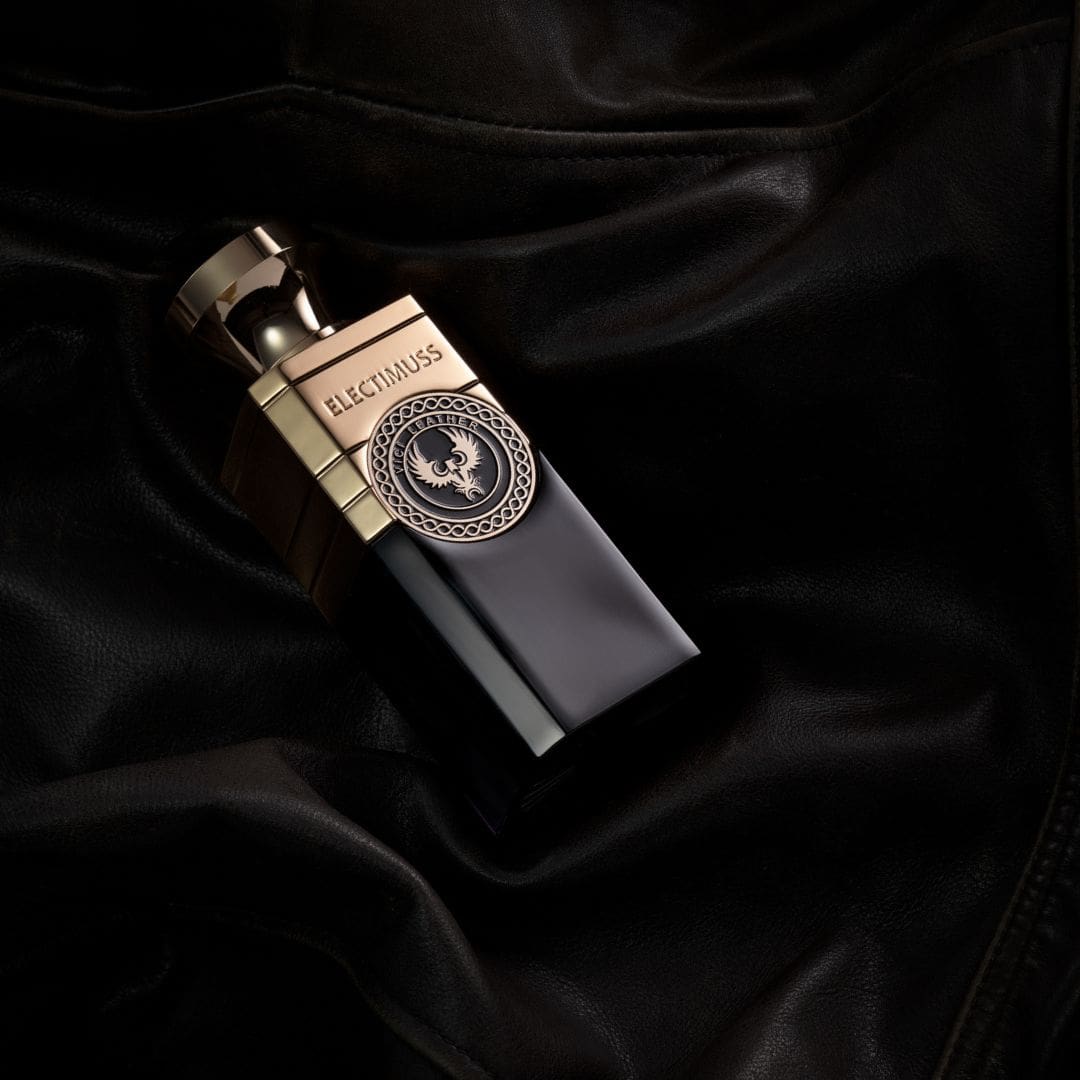
VICI LEATHER
Pure Parfum — £250
Named after Julius Caesar's legendary battle cry. Cinnamon and pink pepper over sweet leather accords and tuberose, grounded in warm amber and balsamic depth. Elegantly unisex — hard and soft, luxurious and confident. By master perfumer Julien Rasquinet.


A VOYAGE OF DISCOVERY
Discover With Confidence
Embark on a scented voyage of discovery with this perfectly presented Discovery Set. Twenty bestselling fragrances and latest releases, beautifully presented in a signature box. The complete cost is redeemable against any full bottle purchase.