



Patchouli, Twice Told: The Two Faces of Pluto and Persephone
Some ingredients are too rich for a single story.
Patchouli is one of them — a note that has been worn by Egyptian pharaohs to scent their tombs, by Indian merchants to protect cashmere shawls in transit to London, by 1960s flower children, and by 21st-century niche perfumers chasing depth. It is, depending on who you ask, earthy or seductive, hippie or luxurious, masculine or feminine. It refuses to settle.
So when our master perfumers sat down with the brief for a Consort Collection patchouli, we made a decision that on paper looks indulgent and in practice was inevitable: we would not make one fragrance. We would make two. One for the dark. One for the light. Two perfumers, two compositions, one note told twice — through the Roman myth of Pluto and Persephone.
This is the story of Patchouli of the Underworld and Persephone's Patchouli.

What does patchouli smell like?
Before the myth, the molecule.
Patchouli (Pogostemon cablin) is a leafy plant native to the islands of Indonesia, the Philippines, and parts of India. The fragrance is steam-distilled from the leaves — but only after they have been carefully aged. Like wine, patchouli oil improves with maturation; the harsh, green camphor notes mellow over months and years into something rounder, warmer, and far more complex.
At its best, patchouli smells of damp earth after rain, of polished wood, of incense in a Mediterranean church. There is a sweetness to it that some find almost edible — chocolate, dark fruit, a whisper of red wine — and a darkness that others find almost animal. The aged oils, the kind we work with at Electimuss, develop a smoothness more akin to sandalwood than to the green leaf they came from.
Is patchouli masculine or feminine? Neither. Both. This is precisely why niche perfumery loves it — because patchouli sits at the intersection where opposites stop being opposites.
Two perfumers, one note
When founders Luke Granger and Jason Collison commissioned the Consort Collection in 2015, the philosophy of Electimuss — to choose the best — meant something specific. It meant working with master perfumers as creative partners, not contractors. It meant Extrait de Parfum at 25–35% concentration. And it meant trusting that two equally talented noses, given the same ingredient and the same myth, would produce two genuinely different fragrances.
We were right.
"The idea was to build a dark patchouli, with a furry texture, as dark and sumptuous as a panther's fur."
— Kevin Mathys, Perfumer, Patchouli of the Underworld
"I used patchouli heart, which is a cleaner patchouli note, enriched with musky and ambery textures. And of course six pomegranate seeds."
— Christian Provenzano, Perfumer, Persephone's Patchouli
Two perfumers. Two compositions. The same myth, told from two ends of the underworld.
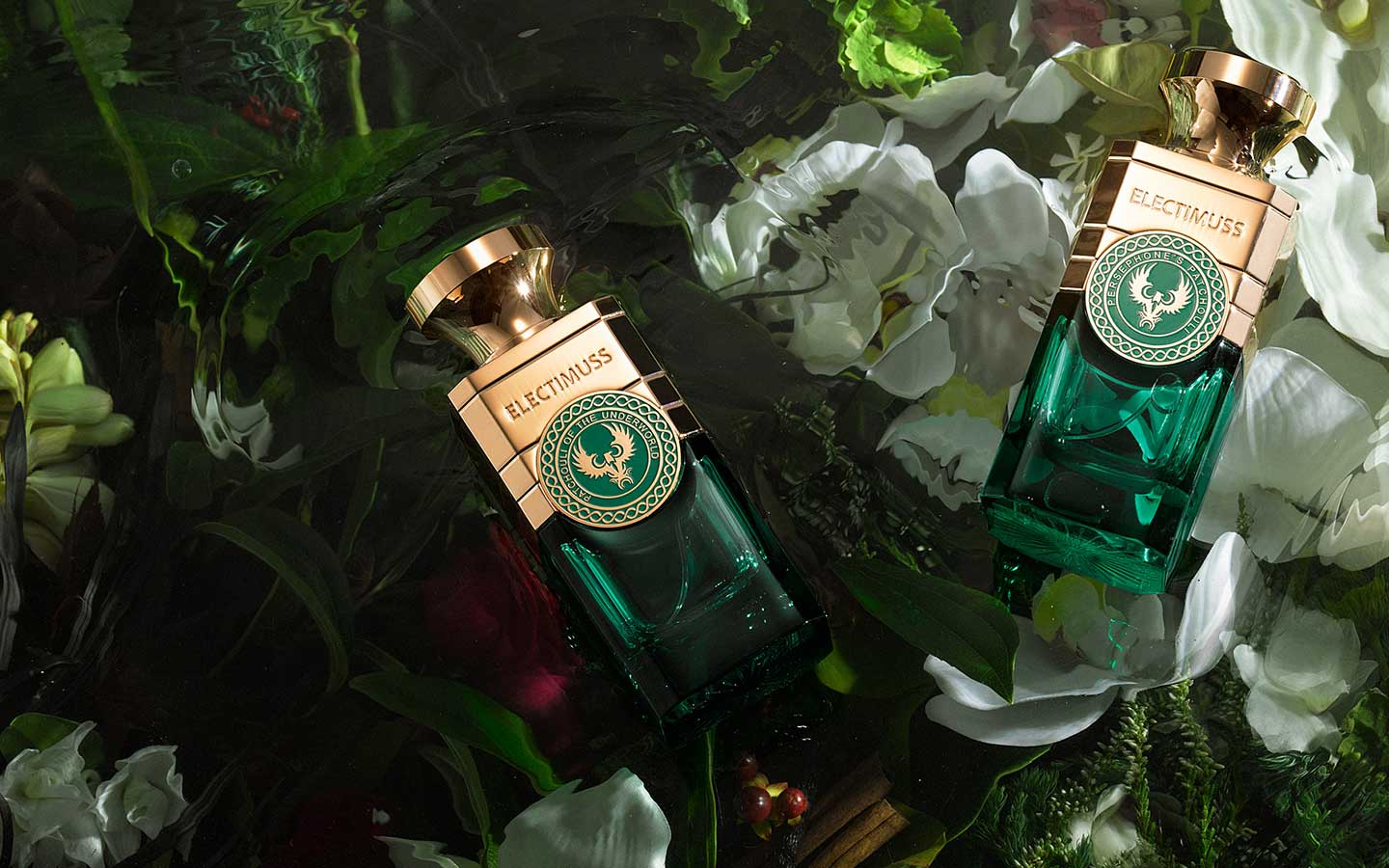
Patchouli of the Underworld — the panther's fur
Pluto's place in the Roman pantheon was not, despite later misreadings, the realm of evil. It was the realm of depth — the underworld as the source of precious metals, gemstones, oils, the things that the earth gives only to those who venture into it. Patchouli, distilled from leaves grown in volcanic Indonesian soil, fits the lineage exactly.
Mathys's composition opens with a riot of pepper — black and pink — softened by mandarin and the resinous kiss of cistus. It is a top note that warns you: this is not a polite patchouli. The heart pushes the door open. Patchouli, warm and embracing, meets a forceful leather and the spice of carnation. Mathys describes thick, waxy leaves pushing through the gloom, and that is exactly how it wears — green at the edges, dark at the centre.
The base is where the panther purrs. Labdanum offers a complex, sophisticated weight; styrax adds sweetness and spice; castoreum rounds the composition with a deep, animalic resonance. Wear it after dark, in winter, in rooms lit by lamps rather than ceiling lights. It is unapologetic about being seen.
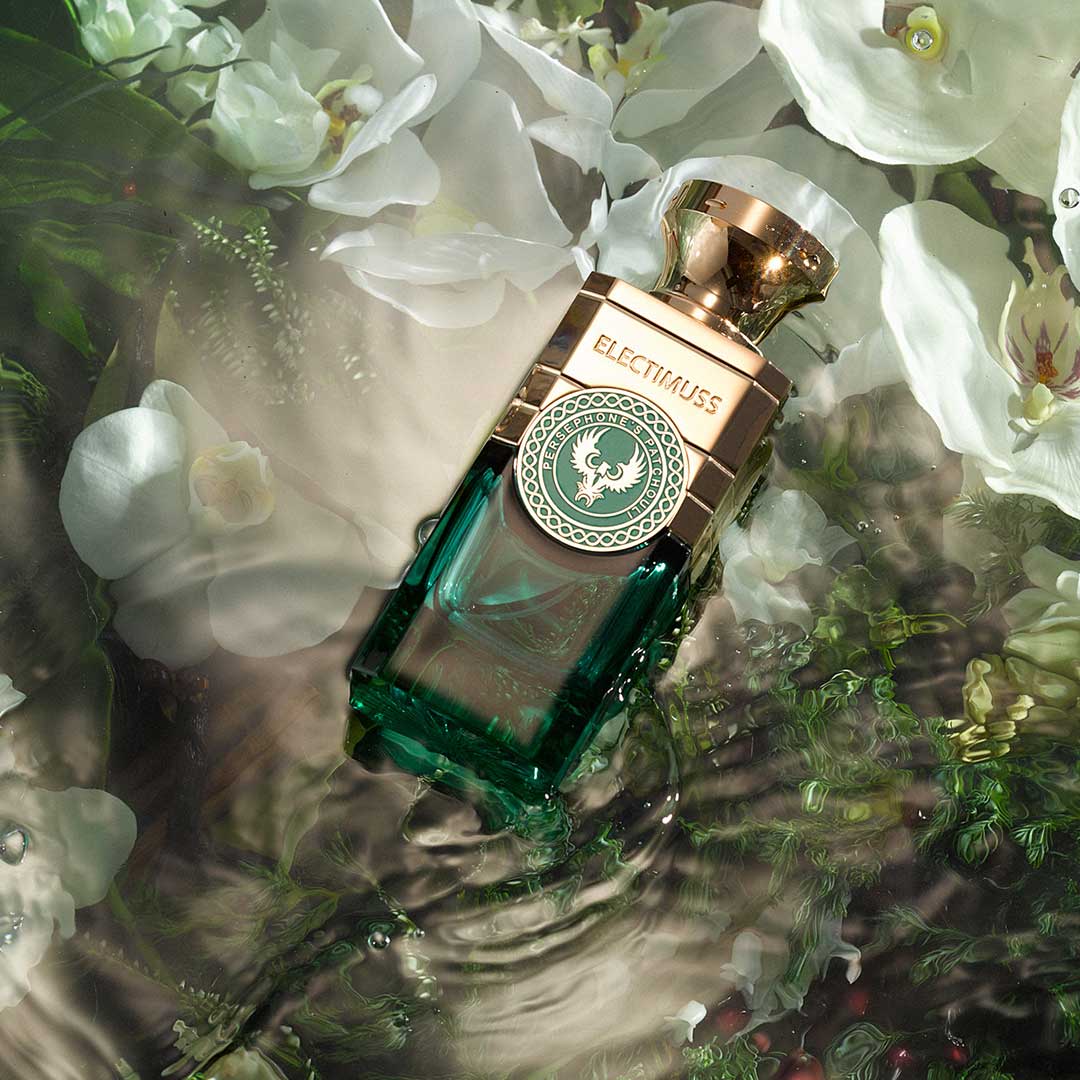
Persephone's Patchouli — six pomegranate seeds
Persephone's myth turns on six pomegranate seeds. Tricked into eating them in the underworld, she became bound to return there for six months of every year — the months we now call winter. Her ascent is spring. Her descent is autumn. Provenzano's fragrance lives in the in-between.
It opens with cardamom, plum and pomegranate — a top note that is bright but never fizzy, fresh but never thin. The heart is where Provenzano's patchouli heart — a cleaner, refined fraction of the oil — meets responsibly-sourced Egyptian jasmine and the velvet of Bulgarian rose. The patchouli grounds the florals; the florals lift the patchouli. It is a composition that argues, gently, that lightness is a discipline.
The base is honey, sandalwood, ambergris. There is a touch of coffee in there, Provenzano admits — added for richness, not for novelty. Wear it on a spring morning. Wear it to dinner. Wear it to a wedding in October. Persephone's Patchouli encapsulates, in his own words, the abundance of nature at the peak of her powers.
A pair, by design
Most fragrance houses release a flanker — the same idea, slightly diluted, six months later. The Consort Collection works differently. Patchouli of the Underworld and Persephone's Patchouli were not designed in sequence. They were designed in conversation. Two perfumers, two interpretations, one ingredient — released together because the myth requires both.
For the full Electimuss patchouli canon, including supporting compositions where patchouli sits in the heart rather than the spotlight, explore the Patchouli Collection.
How patchouli is aged
The best patchouli oil is not freshly distilled — it is rested. Producers in Indonesia and India will hold barrels of fresh oil for one, two, even five years before bottling. The volatile camphor notes evaporate; the heavier, sweeter, woodier facets ripen. A bottle of patchouli that has been aged five years will smell almost nothing like the same oil aged three months. The patchouli we work with at Electimuss is always aged — and the difference between aged and unaged is the difference between a great fragrance and an unwearable one.
The hippie problem
Yes, patchouli was the smell of the 1960s counterculture. It was used to mask the scent of cannabis, worn as an act of rebellion against department-store perfumery, and bought cheaply in Indian import shops. The reputation stuck for forty years. What the modern niche revival has done — Mathys and Provenzano included — is rescue patchouli from its association with cheap, unaged oil and remind the wearer that the fault was never with the ingredient. The fault was with the bottle.
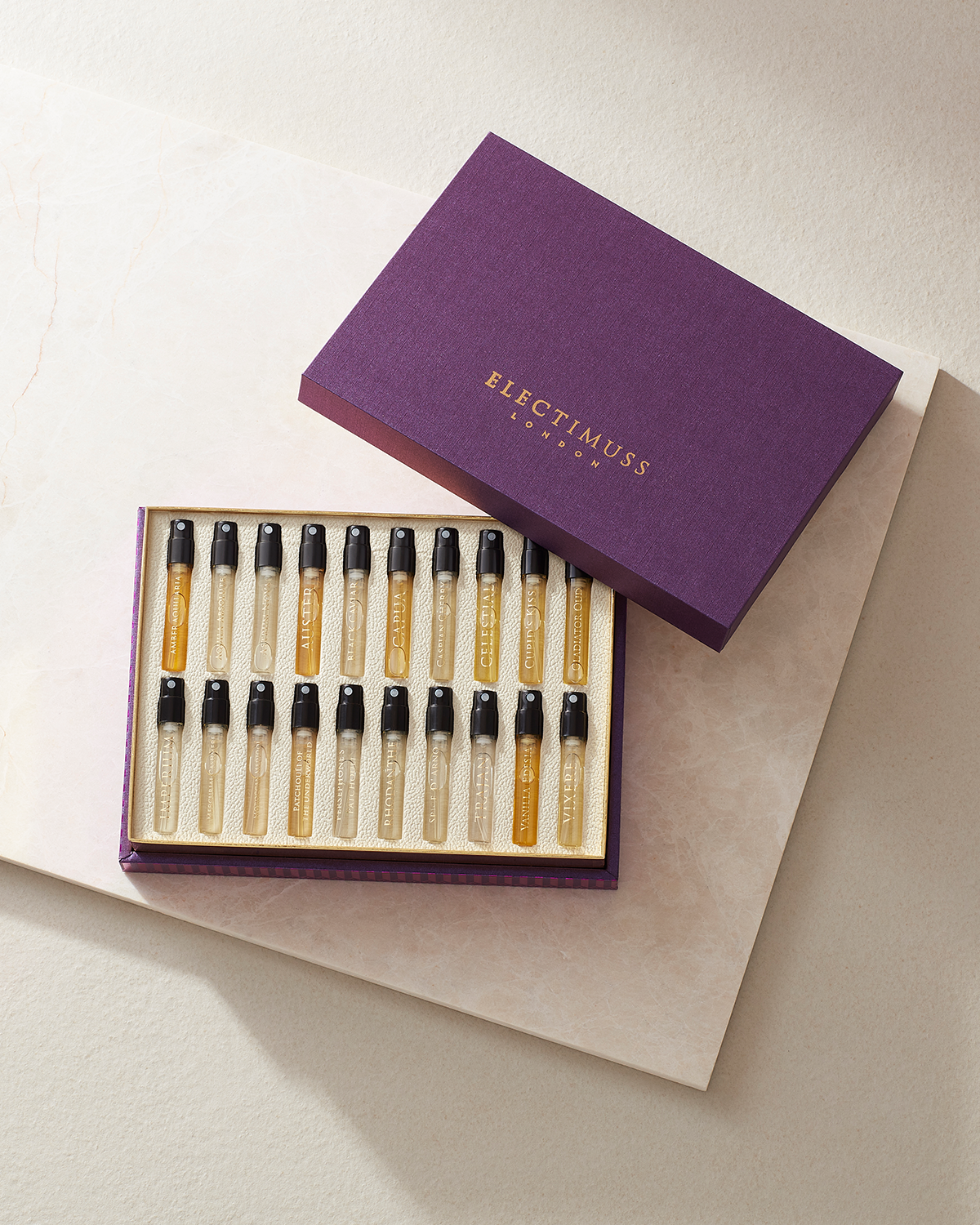
A VOYAGE OF DISCOVERY
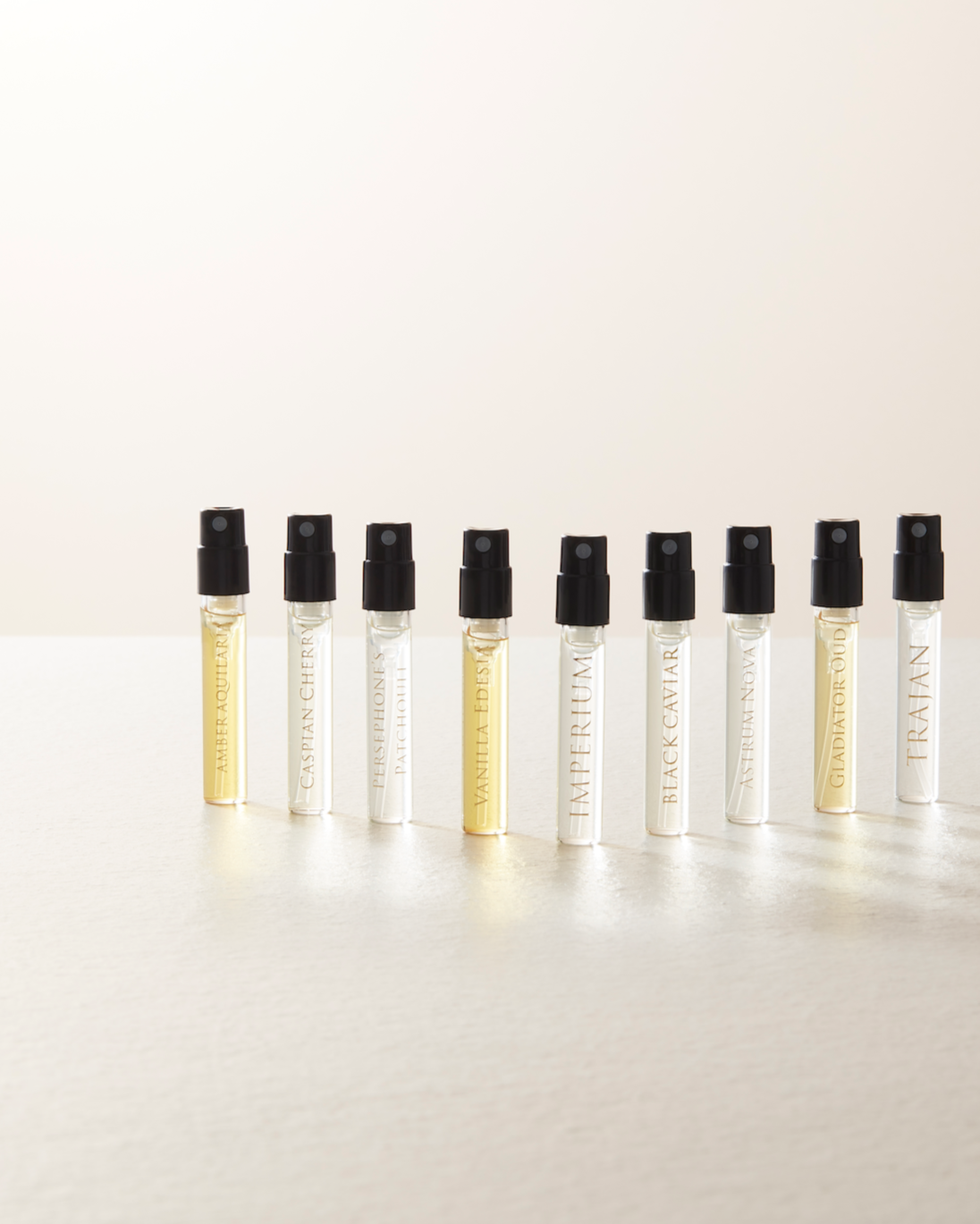
Embark on a scented voyage of discovery with our perfectly presented Discovery Set. Containing a selection of 20 bestselling fragrances and latest releases — including Patchouli of the Underworld and Persephone's Patchouli — presented in a beautiful box, you will be immersed fully in our fragrant world.

Or create your own
Prefer to choose your own combination? Our Create Your Own Sample Set lets you select the fragrances that intrigue you most — including both Patchouli of the Underworld and Persephone's Patchouli — in travel-friendly atomisers, perfect for living with a fragrance for a week before committing to a full bottle.